
KNOW MORE INDUSTRY NEWS & KNOWLEDGE
The Production Process of Track Chain
Jan 04,2024


As a professional manufacturer of Crawler Crane Undercarriage Parts, we understand the production process of Crawler Chain and can provide high-quality products.
Crawler crane chain production process:
1. Material Selection: We purchase high-strength, wear-resistant, and durable metal materials, usually 40Mn2 / 35MnB / 35MnBH, etc., from high-quality material suppliers. These materials are subject to stringent quality inspection and certification to ensure that they meet the production requirements.
2. Forging and Machining: Through advanced machining equipment and forming processes, the selected materials are cut into chain parts of suitable sizes. These parts require precise dimensions and surface finish to ensure that they can be effectively assembled and machined in subsequent processes.
3. Heat Treatment: Chain parts are subjected to a heat treatment process to increase their hardness and wear resistance. This usually includes quenching, tempering, and other heat treatment processes to ensure that the chain can withstand high strength and heavy load working conditions during use.
4. Assembly and Welding: The heat-treated chain parts will be assembled into a complete chain structure and undergo a welding process to ensure a strong connection and structural stability. The welding process requires precise operation and quality control to ensure the strength and reliability of the welded joints.
5. Surface treatment: After finishing the welding, the chain needs surface treatment, which usually includes anti-corrosion treatment such as spraying and galvanizing to increase its durability and service life.
Our production process strictly follows international standards and quality control requirements to ensure the high quality, stability, and durability of our crawler crane chains. We are committed to producing high-quality products that meet the needs and expectations of our customers to provide reliable construction machinery parts.
A: Material Selection

When selecting materials to manufacture crawler crane chains, high-strength alloy steel is usually chosen as the main material. This is because alloy steel has excellent mechanical properties and wear resistance, making it suitable for use in the manufacture of chains that need to withstand high stress and harsh environmental conditions.
Alloy steel usually includes some common elements such as carbon, manganese, chromium, molybdenum, etc. The addition of these elements can increase the hardness, strength, and wear resistance of the steel. Their carbon content is usually between 0.20 percent and 0.45 percent, which provides adequate hardness and strength.
When selecting alloy steel materials, it is necessary to take into account the working conditions that the chain will face during use, such as the pressure, vibration, and friction it will be subjected to, as well as the durability and strength it will need to have. Therefore, the choice of material needs to be considered in conjunction with these factors to ensure that the final chain product has the required performance and reliability.
In addition to alloy steel, some application scenarios also consider the use of stainless steel materials for chain manufacturing to cope with special working environments, such as the need for corrosion resistance.
Material selection is a very important part of the manufacturing of crawler crane chains, the right material can ensure that the chain has good strength, wear resistance, and durability to meet the actual use of construction machinery in a variety of complex working conditions.
B: Forging and Machining
The forging process of chain links:

1. raw material preparation: firstly, it is necessary to prepare suitable alloy steel material, usually a high-strength and wear-resistant steel.
2. Preheating: Preheat the raw material to improve its plasticity and facilitate the subsequent forging operation.
3. Forging: The preheated steel is put into the forging equipment and shaped through the forging process. This process includes several forging strokes and heating to ensure that the shape and size of the chain links meet the design requirements.
4. Cooling and cleaning: After forging, the chain links will be cooled quickly to stabilize their organizational structure, and then cleaned and remove oxides from the surface.
Machining process of chain links:

1. Cutting: The forged chain links will be cut to obtain the required length of chain link blanks.
2. Drilling: Drill holes in the chain links for mounting bolts and connecting other chain links.
3. Roughing and finishing: Roughing and finishing the chain links by lathe, milling machine, and other equipment, trimming the surface, machining the holes, and other processes.
4. Heat treatment: Heat treatment is carried out on the machined chain links to improve their strength and wear resistance.
5. surface treatment: surface treatment of chain links, such as spraying anti-rust coating or plating treatment.
The whole production process also includes assembly, quality inspection, and other links to ensure that the final production of chain links meets the design requirements and quality standards.
C: Heat Treatment

1. Heating: Firstly, the chain links will be put into the heat treatment furnace for heating. The temperature of heat treatment usually varies according to the type of material and the design requirements of the chain link. There are usually quenching temperatures, tempering temperatures, and other requirements.
2. Quenching: Once the chain link reaches the desired heating temperature, it is cooled rapidly in a process called quenching. Quenching can be carried out in different media, such as water, oil, or air, depending on the material of the link and the design requirements. Quenching causes a change in the organization of the chain links and enhances their hardness and strength.
3. Tempering: After hardening, chain links are usually tempered. Tempering is a process of heating the links to a lower temperature to reduce the brittleness of the links, reduce the stresses caused by quenching, and increase the toughness and toughness. Tempering also regulates the hardness of the chain links to achieve the hardness and strength required by the design.
4. Cooling and cleaning: after heat treatment, the chain links will be cooled rapidly cleaned, and removed from surface oxides.
The whole heat treatment process needs to strictly control the temperature, time, and cooling method to ensure that the chain links obtain the ideal mechanical properties and organization structure. This will ensure that the final produced chain links have good strength, toughness, and wear resistance, and can meet the requirements of various usage environments.
D: Assembly and Welding
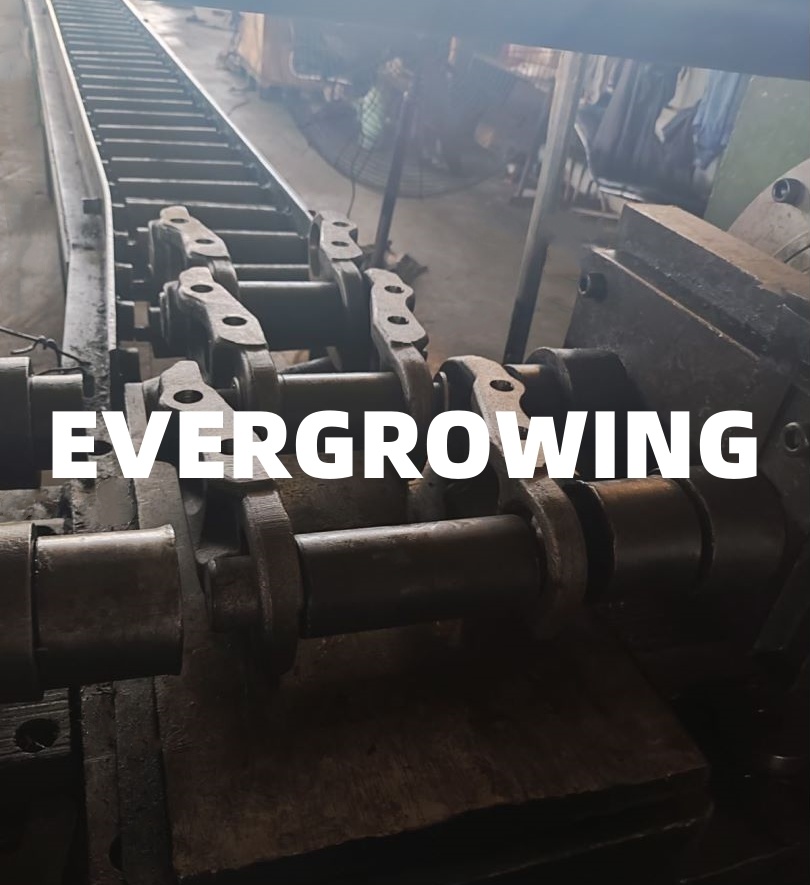
1. Chain assembly: The chain usually consists of several parts, including chain links, bushings, pins, and so on. In the assembly process, it is necessary to first combine the parts according to the design requirements to ensure that their positions and matching accuracy meet the requirements. Usually, special assembly equipment and tools are used to assemble to ensure the quality and performance of the chain links.
2. Welding: After the chain links are assembled, some chains need to be welded. The main purpose of welding is to firmly connect the parts of the chain links to ensure that the chain will not fall off or loosen in the process of use. Welding is usually done between components such as link plates and rollers to ensure a strong and durable weld. Specialized welding equipment and processes will be used during the welding process to ensure quality and efficiency.
3. Inspection and quality control: After assembly and welding are completed, the links are subjected to rigorous inspection and quality control. This includes quality inspection of the welded parts to ensure the firmness and completeness of the welding; and functional performance test of the assembled chain links to ensure that they meet the design requirements and use standards.
The whole chain assembly and welding process requires strict control of process parameters and quality requirements to ensure that the final production of chain links has good solidity, durability, and performance stability. This can ensure the chain can operate safely and reliably under various operating environments.
E: Surface treatment
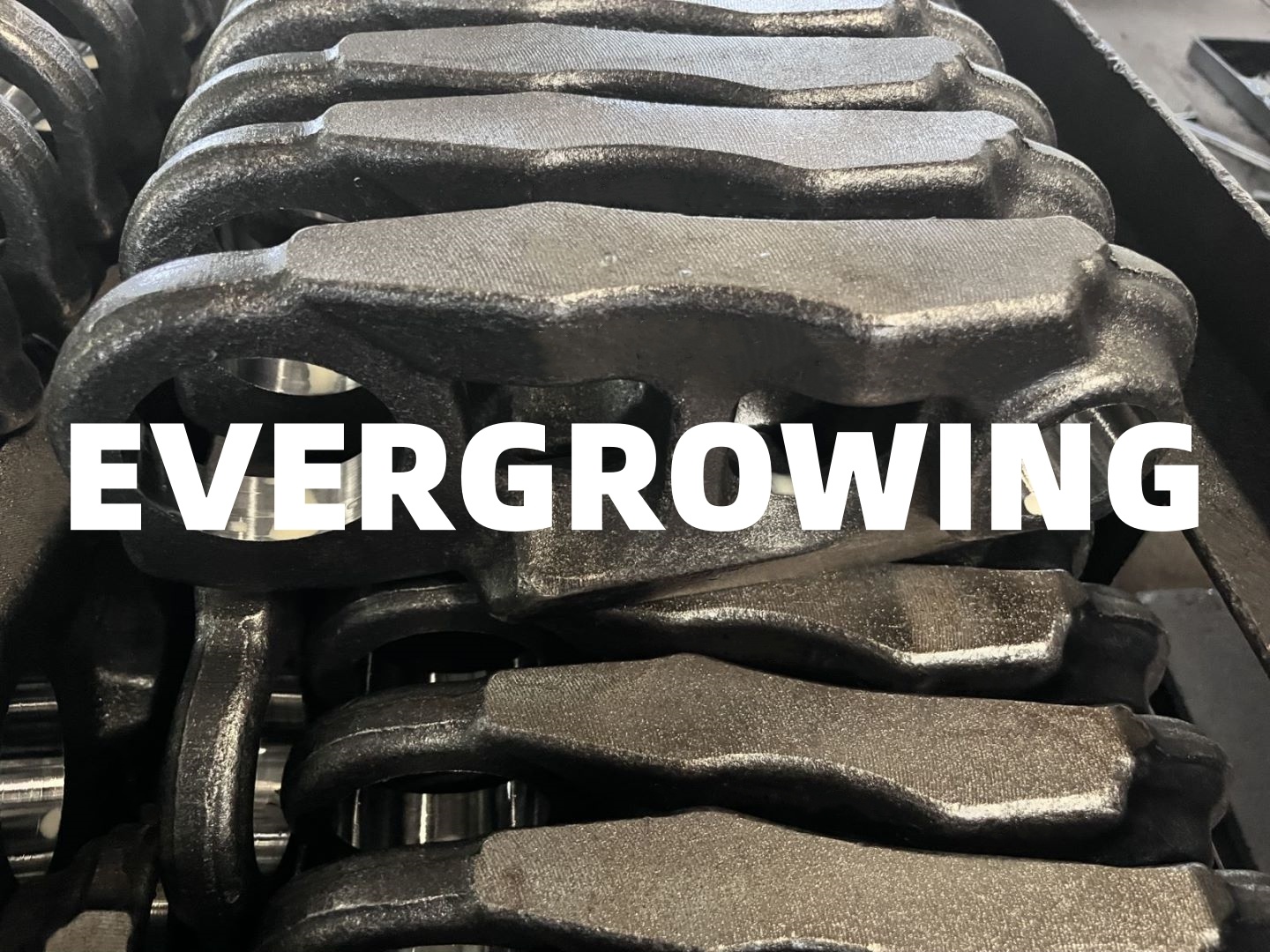
Spray coating is a common method of chain surface treatment, which can provide the chain with better wear resistance and corrosion resistance. In the process of chain production, spray coating is usually carried out in the way of plastic spraying or plastic coating, both of which can effectively protect the surface of the chain and have certain aesthetic effects.
1. Plastic spraying: Plastic spraying is a method of spraying powder coating onto the surface of a chain and baking it under high temperatures to make it cured. Plastic spraying coating has high abrasion resistance and corrosion resistance, which can effectively protect the chain from the influence of the external environment. In addition, the plastic spraying coating has good adhesion and decorative properties, which can improve the beauty of the chain to a certain extent.
2. Plastic Coating: Plastic coating is a method of applying liquid coating on the surface of a chain and then curing it. Compared with plastic spraying, plastic-coated coating is usually more even and smooth, and at the same time can provide higher surface protection performance. The color and gloss of the plastic-coated coating can also be adjusted to suit the customer's needs.

We are a professional manufacturer of crawler crane undercarriage parts, dedicated to providing customers with high-quality products and services. Our products cover a wide range of undercarriage parts, including track shoes, idlers, sprockets, track rollers and top rollers, etc. These parts are widely used in various construction machinery, such as excavators, bulldozers, loaders, and cranes. These parts are widely used in various construction machinery, such as excavators, bulldozers, loaders, and cranes.
We use advanced production processes and high-quality materials to ensure that our products have excellent wear resistance, corrosion resistance, and durability. Whether your equipment is on a construction site, mining site, or other heavy-duty operation, we can provide you with the most suitable undercarriage parts to ensure that your equipment runs smoothly and stays in top condition.
In addition to our standard products, we can also customize undercarriage parts with special specifications and special materials to meet the needs of different equipment and different working environments.
Whether you need to replace the undercarriage components of your existing equipment or are looking for a customized solution, we can provide you with professional advice and quality products. If you have any needs about undercarriage parts, please feel free to contact us, we will be happy to provide you with the most satisfactory service.
Mail: info@crawlercranesparts.com
Whatsapp: +86 17853553781
Keyword:
track chain link
crawler crane parts
track chain production process
Related Posts
FUWA QUY65 Track Rollers Shipped to Malaysia
Oct 13,2025
TZGC150H-1 crawler crane debuts at BICES 2025
Sep 26,2025
New Sany SCC600A-1 Crane Top Roller
Sep 20,2025
High-Quality Slewing Bearings for Crawler Cranes
Sep 15,2025
Why Crawler Crane Idlers Crack?
Aug 29,2025
Related Products
There is no relevant data for the time being, please add it backstage!
undercarriage parts we offered

Contact with us
YANTAI EVERGROWING IMPORT AND EXPORT CO., LTD.
ADD: A508, NO 133-1 YINGCHUN ROAD, LAISHAN DISTRICT, YANTAI CITY, CHINA
ZIP CODE: 264003
TEL: +86-535-6724921
FAX: +86-535-6724922
EMAIL: info@crawlercranesparts.com